
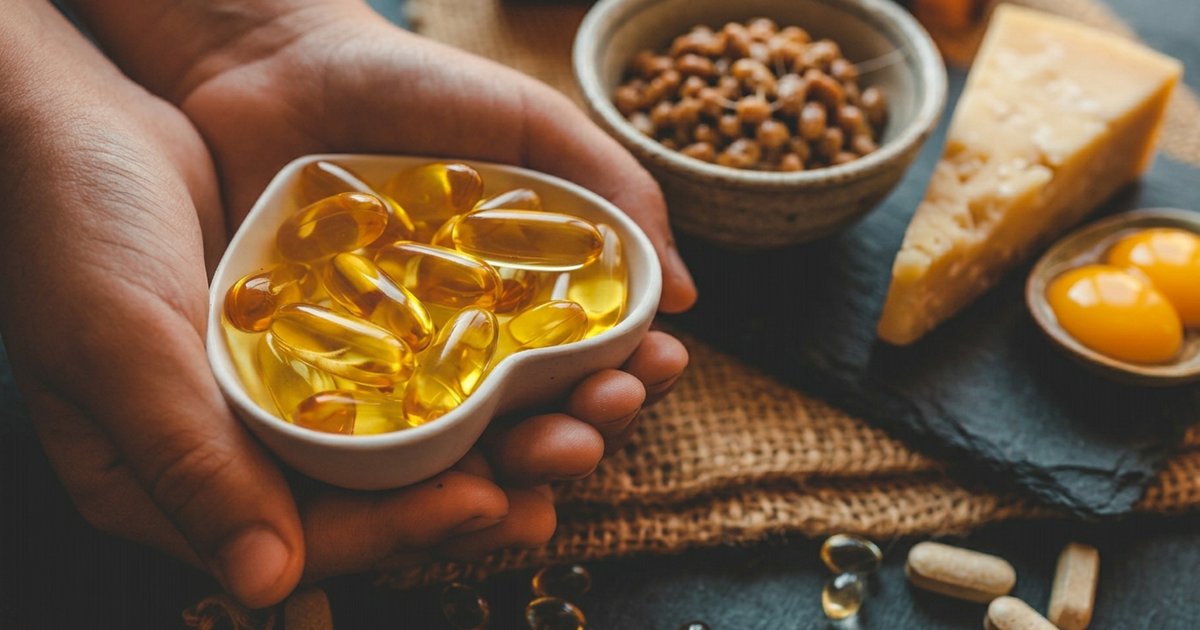
Part 2 of Our Vitamin K2 Series
Read Part 1: Can Vitamin K2 Help Slow Calcium Buildup in Your Arteries?.
Most people know that calcium and vitamin D are essential for strong bones. But there's another important nutrient that receives far less attention: vitamin K2.
Calcium is necessary for maintaining strong bones and teeth, but when it accumulates in the wrong places, particularly the walls of our arteries, it can contribute to cardiovascular disease.
This raises an interesting question: How does the body help calcium reach the bones where it's needed while limiting its accumulation in places where it doesn't belong?
Vitamin K2 plays an important role in this process.
Vitamin K1 vs. K2: What's the Difference?
Vitamin K is a family of related compounds, with two primary categories:
- Vitamin K1 (phylloquinone): Found primarily in leafy green vegetables such as spinach, kale, and collard greens. K1 is especially important for normal blood clotting.
- Vitamin K2 (menaquinones): Found in certain animal products and fermented foods. K2 is particularly interesting for its roles in bone metabolism and vascular health.
Interestingly, the body can convert vitamin K1 into a form of K2 called MK-4. This conversion occurs in several tissues, including the brain, kidneys, and pancreas.
However, how much is converted and whether it adequately meets the body's needs remain important questions.
MK-4 vs. MK-7: Two Important Forms of Vitamin K2
Although vitamin K2 includes several related compounds, MK-4 and MK-7 are the two forms most commonly found in supplements.
MK-4 (menaquinone-4) is found in animal foods and is also produced within the body. MK-7 (menaquinone-7) is produced through bacterial fermentation, with natto being an especially rich dietary source.
One important difference is how long these forms remain in circulation. MK-7 has a much longer blood half-life, approximately three days, while MK-4 disappears from the bloodstream more rapidly.
But perhaps the most surprising difference is the enormous variation in doses used in clinical research.
- MK-7: Common supplement doses range from approximately 90–180 micrograms (mcg) daily. Some clinical trials have investigated higher doses, including 360 mcg daily in the coronary artery calcification study discussed in Part 1.
- MK-4: Japanese osteoporosis studies have commonly used 45 milligrams (mg) daily, equivalent to 45,000 micrograms (mcg).
That's a 125- to 500-fold difference in the amounts used!
This can understandably alarm people who see milligrams on one K2 product and micrograms on another. However, the two forms differ in how they are absorbed, distributed, and metabolized, and their clinical research has involved very different dosing approaches.
Dose size alone does not establish safety, and a longer half-life does not necessarily mean better results. These are research doses, not personal dosing recommendations; the 45 mg MK-4 regimen should not be started without medical supervision. We'll examine what the research tells us about both forms in Part 3.
Vitamin K2: Helping Calcium Get Where It Belongs
Calcium is essential for building and maintaining strong bones. Without adequate calcium, bones cannot mineralize properly.
Vitamin K2 helps activate osteocalcin, a protein produced by bone-forming cells. This activation occurs through a process called carboxylation, which allows osteocalcin to bind to the calcium-containing mineral in bones.
Think of osteocalcin as part of the glue that helps calcium become incorporated into the structure of our bones. Vitamin K2 helps activate that glue so it can do its job.
At the same time, K2 helps activate another protein called matrix Gla protein (MGP), which inhibits inappropriate calcium deposits in arteries and other soft tissues. MGP also requires carboxylation to function properly.
Think of MGP as a protective guard that helps keep calcium from building up where it doesn't belong.
Together, these two proteins illustrate how vitamin K2 helps support strong bones while helping regulate calcification in blood vessels.
Why Vitamin D3 and K2 Work Together
Vitamin D3 and vitamin K2 play complementary roles in calcium metabolism.
Vitamin D helps the body absorb calcium from the digestive tract and supports the production of vitamin K-dependent proteins, including osteocalcin and MGP.
Vitamin K then helps activate these proteins so they can perform their functions.
Vitamin D helps bring calcium into the body, while vitamin K2 helps activate the proteins that put calcium to good use.
Other nutrients, including magnesium, also contribute to healthy calcium and bone metabolism.
Getting enough calcium is only part of the equation. The body also needs the nutrients involved in properly utilizing it.
Are We Getting Enough Vitamin K2?
Vitamin K1 is abundant in leafy green vegetables, but obtaining substantial amounts of vitamin K2 through diet can be more challenging.
Natto, a traditional Japanese fermented soybean food, is exceptionally rich in MK-7. Animal foods and certain cheeses also contain K2, although the amounts vary considerably.
Here are approximate amounts found in common foods:
| Food | Serving | Approximate Vitamin K2 |
|---|---|---|
| Natto | 40 g | 400 mcg |
| Cheddar cheese | 1.5 oz (43 g) | 4 mcg |
| Mozzarella cheese | 1.5 oz (43 g) | 2 mcg |
| Hard-boiled egg | 1 large | 4 mcg |
| Rotisserie chicken breast | 3 oz (85 g) | 13 mcg |
Amounts vary depending on the specific food, fermentation, animal feed, and preparation. Different foods contain different forms of K2.
Recommended intake guidance applies to vitamin K overall; there is currently no separate established recommended daily intake for vitamin K2. This makes it difficult to determine precisely how much K2 people should obtain from food.
This is one reason K2 supplementation has attracted growing interest, particularly for people concerned about bone strength and cardiovascular health.
Vitamin K2's Safety Profile
Vitamin K2 has generally been well tolerated in research. Vitamin K has a low potential for toxicity, and no tolerable upper intake limit has been established. Even the substantially higher MK-4 doses used in osteoporosis research have generally been well tolerated. However, the absence of an established upper limit does not mean every dose is appropriate for every person.
Important: Vitamin K2 can interfere with warfarin and other vitamin K-antagonist anticoagulants. Anyone taking these medications should consult their physician before starting vitamin K2 supplements.
The Bottom Line
Vitamin K2 participates in two important processes: supporting healthy bone mineralization and helping regulate calcium deposition in blood vessels.
Its complementary relationship with vitamin D3 makes it especially interesting, although the clinical benefits of combining them are still being investigated.
In Part 1, we explored promising new research suggesting that vitamin K2 may slow calcium buildup in coronary arteries. But that's only part of the story.
In Part 3, we'll examine the broader clinical research on vitamin K2, including its potential effects on bone density, fracture prevention, arterial stiffness, and cardiovascular health.
Clinical studies do not yet establish that vitamin K2 supplements prevent heart attacks or fractures for everyone. They should not replace prescribed treatment.
For broader context, see our heart health and circulation article and guide to supplements.
Scientific References
- NIH Office of Dietary Supplements — Vitamin K: Health Professional Fact Sheet.
- van Ballegooijen AJ, et al. (2017). The Synergistic Interplay between Vitamins D and K for Bone and Cardiovascular Health.. International Journal of Endocrinology.
- Vitamin K: The Effect on Health Beyond Coagulation — An Overview (2012)..
- Vitamin K: Sources, Physiological Role, Kinetics, Deficiency, Detection, Therapeutic Use, and Toxicity (2022)..
- Vitamin K and Bone (2017)..
- European Food Safety Authority (2017). Dietary Reference Values for Vitamin K..
- Linus Pauling Institute, Oregon State University — Vitamin K.
- Vossen LM, et al. (2026). Two Years of Menaquinone-7 Supplementation and Coronary Artery Calcification: A Randomized Clinical Trial. JAMA Cardiology.
Subscribe for Wellness Insights
Get Dr. Mychael Seubert's gut & wellness insights delivered to your email.
We respect your privacy. Unsubscribe at any time.